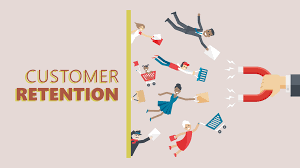
If users are not coming back on their own, you do not have a business, you have a leaky bucket with marketing taped to the side. Here is everything I have learned about retaining users in consumer apps.
What is Retention, Really?
Retention is the user doing a valuable activity in the app, and then doing another valuable activity again after a time period. The time period could be 1 day, 1 week or 1 month depending on the context of your product. This definition emphasizes the importance of repeated, meaningful engagement rather than simple app opens. By focusing on valuable activities, you ensure that users are not just returning, but actively benefiting from your app’s core features.
Motivation: Intrinsic vs. Extrinsic
🔥 Intrinsic Motivation
The best way to ensure retention is to be top of mind for your users. Ideally, your app solves a use case that creates intrinsic motivation for users to return. In this scenario, they don’t need reminders or nudges - they’ll come back on their own. This type of motivation is powerful because it’s self-sustaining; users return because they genuinely want to, not because they’re prompted to do so.
🎯 Extrinsic Motivation
When intrinsic motivation isn’t enough, you can manufacture extrinsic motivation. This is where you have 100% control and can directly impact your retention. Extrinsic motivation involves creating external reasons for users to return, such as rewards, notifications, or social recognition. While not as powerful as intrinsic motivation, it can be an effective tool when used judiciously.
🚀 The Retention Playbook: Tactics & Strategies
The following tactics are the levers you can pull to manufacture that extrinsic motivation and strengthen the intrinsic pull of your product.
📩 Nailing Push Notifications (PNs)
This is a very interesting problem. One that you can keep iterating on for months. Push notifications pose such variety of opportunities and risks (of losing users) that you can have so much fun with this and derive so many of your own learnings.
The 2 most important things to get right in PNs are the Timing and the Copy. Send the right message at the right time and you get your conversion. If only it was that simple though!
Let’s summarize some of the factors I’ve learned about nailing PNs:
- Find your reachability. The numero uno metric. Reachability is the % of your active users who have given you permission to send them PNs. Your goal is to maintain this as high as possible.
- Find the right frequency. This is not straightforward. Run tests to find the limit. Users in the US are less likely to appreciate a barrage of PNs compared to users in India. Android users often tolerate more PNs than iOS users. Find your own balance.
- Work on increasing your reachability. Always prime your PN permission requests. Iterate on the copies to focus on the single biggest thing the users find valuable, and talk about just that on the permission request.
- Maintain your reachability. Some users will eventually turn PNs off. You can build touchpoints with sentient copy that acknowledge you probably sent too many PNs, and ask them to consider turning them on again.
- Figure out the time of day. Monitor natural non-PN-assisted usage patterns and see when users organically open your app. This will be your starting point to schedule PNs.
- Leverage the ‘best time’ feature to target PNs at the individual user’s most active times for the best conversion.
- Add personalized content. The easiest is the user’s name. But you can go very complex and personalize based on their journey, their last activity, or their current location.
- Try post-session PNs. One whacky thing that often works is sending a PN 1-5 min after a user closes a session, offering a solution to a roadblock they faced (e.g., offering a discount after they hit a paywall).
- Use deeplinks. Always land the users straight to the point. Save them time and clicks.
- Cycle your copy. Nobody likes to get the same dumb PN copy every day. Cycle through 2-3 different copies so they’re reasonably fresh.
- Avoid PN collisions. Always design your PNs as a story. If you’re sending 4 PNs in a day, the user should be able to understand why each of those 4 PNs came.
- Understand PN-stacking. On iOS and Android, PNs from the same app get clubbed. At times, there’s power in letting your latest, most important PN sit on top of that stack.
✉️ Beyond the App: Email & Re-engagement
Don't forget the most powerful channel you own: email. While PNs are for immediate nudges, email is perfect for deeper, "long-form" retention, especially for users who have turned off notifications.
- Weekly Summaries: Package the user's weekly achievements, stats, or personalized content (e.g., "Your Week in Review"). This provides value even without opening the app.
- "We Miss You" Campaigns: Target users who haven't logged in for 14, 30, or 60 days. Offer a specific reason to return, like a new feature or a small bonus.
- Feature Announcements & Tutorials: Use emails to teach users how to use an existing feature they haven't discovered, making dormant users curious.
⚡ Optimizing the Core Loop
These tactics focus on what happens inside the app to make each session valuable.
Make the High-Value Action Clear
Once the user is in your product, make the one high-value action as clear as possible. You don’t need a full-screen overlay. Gentle eye-guides are enough: a subtle shimmer, a tooltip, or clear contrast that brings out the action prominently.
Quick Time to Value (TTV)
Give users a great, short time to value. The key is to make sure the user understands that they were successful in their first use of the product. Make sure the success is explained to them in as clear a manner as possible.
Ending First User Session on a High
Make sure when users end a session, they go away feeling fulfilled, happy and successful. Define what ‘successful’ means in your product’s context. If they depart feeling frustrated, they will remember that the next time you nudge them.
🧠 Deep Personalization
A truly personalized experience makes the app feel like it was built just for them. This goes far beyond Hello, [Name].
- Personalized Feeds: If your app is content-based, the relevance of the feed is your #1 retention metric.
- Contextual UI: Change the app's homepage based on the user's past behavior or time of day.
- Tailored Onboarding: Ask users their primary goal during onboarding and then tailor the entire app experience to *that specific goal*.
🏅 Gamification & Community
Streaks, but Better
Implement streaks to help users build habits. But these can get boring. You’ve got to get creative. Set streak goals (7-day, 14-day) to make them meaningful. Change the color of the streak flame as it grows. Give some other advantage in the app for a higher streak.
Leveraging User Status Effectively
Giving users status is a good strategy but it only works when the status has meaning. Status gets its meaning from a few things: How scarce it is, how difficult it is to get it, and how many total users do you have for the status to be meaningful and bragworthy.
😱 Gating Features to Drive Curiosity (FOMO)
One of the most powerful drivers of retention can be FOMO. If users can see a feature but can’t use it, they may be driven to unlock it. We often gate a feature that only unlocks if you come back the next day and do a retention-qualifying activity. The caveat: you have to pick the right feature to gate.
🤝 Build a Community (The "Sticky" Factor)
Users may come for the tool, but they stay for the community. Creating a sense of belonging is one of the strongest retention loops. This can be in-app forums, leaderboards, or fostering User-Generated Content (UGC). When their content is in the app, they have a reason to come back.
📱 Platform-Specific Tools
Leveraging App-Icon Badges
Use app badges (the little red number on the app icon) to grab attention. These visual cues create a sense of urgency. However, use them judiciously – overuse leads to badge fatigue. Ensure each badge represents something truly valuable.
Live Activity & Dynamic Island
If a user opens the app but doesn’t complete the desired activity, convert that to a live activity (iOS). This keeps your app visible and accessible, displaying real-time information on the lock screen or in the Dynamic Island, increasing the chances of users returning to complete actions.
Homescreen Widgets
Build widgets for iOS or Android. While they require users to manually add them, once added, they’re extremely effective at bringing users back by providing at-a-glance information and quick access to key app features.
📊 Use Feedback & Churn Surveys
Retention isn't just about pushing users back; it's about listening to why they leave. Implement simple, automated feedback loops to understand your blind spots.
- In-App Surveys: "How would you rate your experience today?" (NPS/CSAT). Use this to find moments of frustration or delight.
- Churn Surveys: If a user deletes their account or is inactive for 30+ days, send an automated email asking "Why did you leave?" The answers will be your single best source of truth for fixing your leaky bucket.